
02 – London Loop and ambiguous wayfinding
- 22 nov. 2023
- 3 min de lecture

Following the London Loop
For our Pecha Kucha proposal, we embarked on a walk along part of the London Loop from Hayes and Harlington to Uxbridge to gain insights for materializing our wayfinding ideas. Inspired by Iain Sinclair’s London walks detailed in Lights Out for the Territory, we opted not to replicate his routes but rather emulate certain aspects of his strategy. Our approach involved following a more predetermined route while keenly documenting the in-situ navigation materials such as signs, maps, and paths. To focus on this exploration, we deliberately relied on the written guide from Ramblers, deliberately omitting top-down maps.

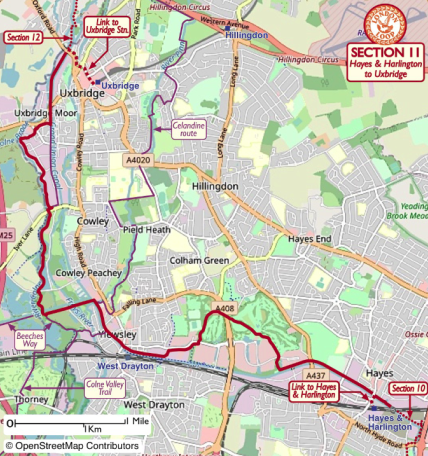

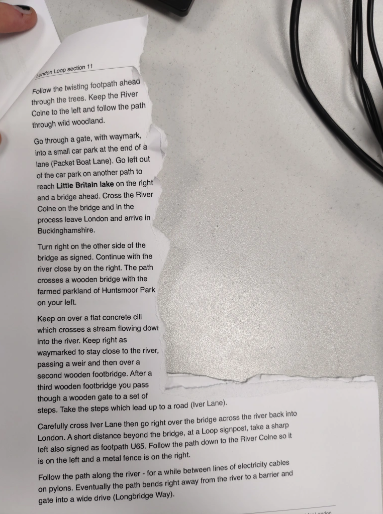
London Loop and ambiguity as a wayfinding strategy
Our efforts centered on capturing images of the waymarking along the route, revealing instances of missing, damaged, or hard-to-notice signs. Although the path was often apparent, we pondered how this simplicity might translate to navigation in urban areas with more intricate pathways.
The wayfinding tools we encountered were often antiquated, with modern signs frequently destroyed or obscured by overgrowth. Amidst these challenges, the pathway itself remained unmistakable.


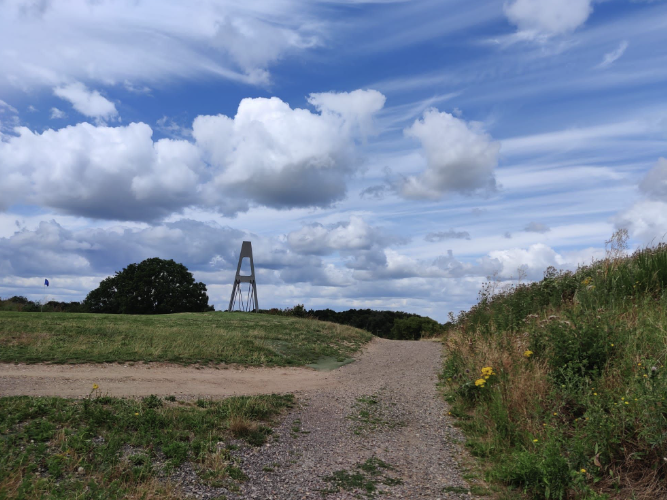


Slideshow of landmarked points during the London Loop walk
The observation of language ambiguity in the guide sparked further exploration to decipher the intended route. As an example, I found myself confused at the sentence "turn away from the river", as we were on a straightforward path that had no clear indication of any parallel paths that would eventually turn left or right. For a moment this caused some confusion but we soon enough realised that this implied maintaining our path until we met a path that led to the right.
This realization hinted at the potential of ambiguity as a tool for exploration, echoing Gaver, Beaver, and Benford's concept of Ambiguity as a Resource for Design.
The issue with uniformity in wayfinding experiences
In our quest to distill our wayfinding experience, we initially attempted to create a taxonomy table, anticipating it would provide a structured understanding of the variables influencing our exploration. I had found that previous scholars and designers had attempted to break down the complex processes of wayfinding through the taxonomy table (fig. 6). This particular table done by J. M. Wiener, S. J. Büchner, and C. Hölscher’s table for wayfinding taxonomy.

(fig.6) J. M. Wiener, S. J. Büchner, and C. Hölscher’s table for wayfinding taxonomy.
However, we soon realized that many of the factors contributing to our natural process of exploration and wayfinding were too nuanced and dynamic to fit into conventional categories. This realization prompted a critical shift in our perspective on modern navigation tools.
The limitations encountered in taxonomy construction underscored the inadequacy of straightforward variables to capture the intricacies of our exploratory journey. It revealed the inadequacy of traditional mapping tools to encapsulate the richness of authentic wayfinding experiences. The process illuminated the stark difference between the rigid structure of mapping tools and the organic, fluid nature of human exploration.


Furthermore, as someone not originally from England, the encounters with language miscommunications during our exploration became an additional indicator of considerations for future target audiences. This aspect shed light on the challenges faced by individuals who rely on tools like Google Maps to navigate unfamiliar environments, emphasizing the importance of creating inclusive and user-friendly navigation solutions that transcend language barriers and cultural differences. Our attempts at creating a taxonomy table thus became a pivotal learning point, steering our focus toward more dynamic and culturally aware wayfinding strategies.
Our exploration prompted us to formalize the initial outcome for aiding wayfinding: a constructed language facilitating the sharing of local knowledge.
Pecha Kucha presentation feedback
During our Pecha Kucha presentation, feedback highlighted the effectiveness of our planning and rehearsal efforts in communicating our ideas clearly. The suggestion to settle on the format of the language early was noted, although there was a divergence of opinions on whether it should be visible, spoken, or visual. At this stage, we expressed a desire to explore a multi-sensory approach, drawing inspiration from naturally occurring human languages that blend visual, audio, and somatic elements. The feedback also underscored the importance of documenting multi-sensory research and incorporating textures and sounds into our work if we were interested in creating a holistic, immersive experience.
Overall our Pecha Kucha presentation garnered positive feedback, acknowledging the meticulous planning and rehearsal that effectively conveyed our innovative ideas. The suggestion to finalize the language format early was considered, with a particular emphasis on its potential visibility, audibility, or visual representation. While the notion of a multi-sensory approach was suggested for exploration, contemplating how it could emulate naturally occurring human languages integrating visual, audio, and somatic elements, remained a point of interest.


Commentaires