
Micro UX: Intertwingle week 3
- 26 mai 2023
- 3 min de lecture
Brief: Design, make and implement a collaborative working tool. Your task is to design a device, apparatus or set of interactions that reaches across disciplines. Your designed outcome should help people identify synergies and navigate practical issues.
Group members: Marty Chen, Jolin Ma, Mengdie Lu, Romit Khurd, Cristèle Sarić, Lingjia Fang, Munira Kazi, Anushka Motiani, Reagan Bbengo, Sushil Suresh
Introduction
In this week's blog, our primary focus was on the critical stage of ideation. Driven by time constraints, we delved into the valuable knowledge acquired from workshops, interviews, and extensive research. Our discoveries unveiled two avenues for intervention: interpersonal relationships and the physical office space. To explore these areas further, we divided into two research focus groups. One group delved into improving collaboration on an interpersonal level, while the other group explored innovative office spaces like We Work and the Barbican. As we shared our findings, it became evident that a united approach incorporating both aspects would be crucial in crafting a product that aligned with the project's brief.
Ideation Exploration: Nurturing Interpersonal Relationships and Transforming Office Spaces
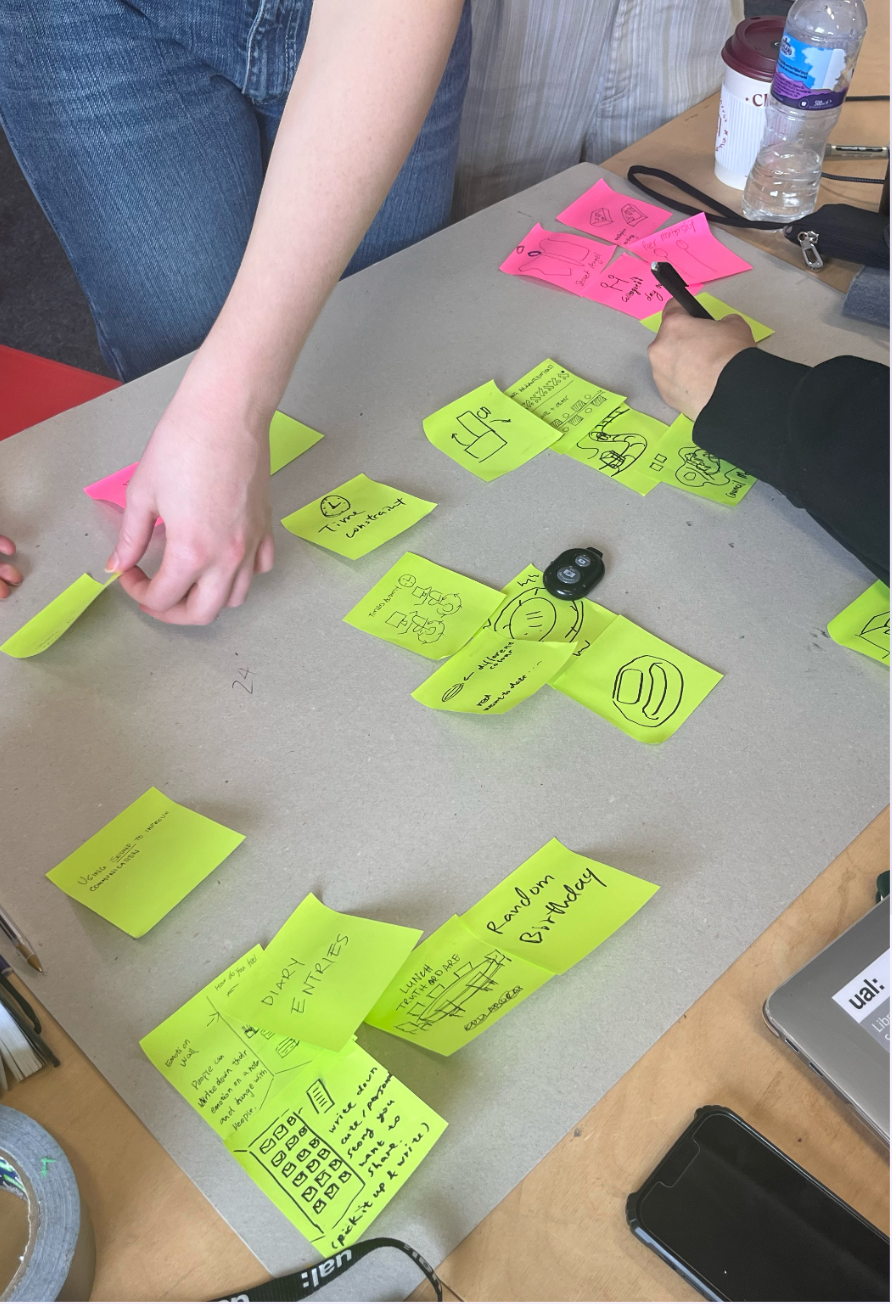
Armed with our research and a fresh perspective, we embarked on generating ideas that could revolutionize collaboration. The process began with the "crazy 8s" technique, which prompted Marty and me to envision a bold intervention using sushi conveyor belts to facilitate communication across the office. We attempted to simplify the concept by considering a zipline alternative, but it proved fruitless. Undeterred, we returned to the ideation process, this time exploring an intriguing idea that emerged during a round of "crazy 8s": an office matchmaking platform. The concept involved enabling colleagues to spend time with individuals from different departments randomly. This idea resonated with half of the group, leading us to seek further feedback. After careful consideration, it became evident that the office matchmaking concept possessed the greatest potential for success.


Navigating Group Dynamics: Overcoming Challenges for Progress
While our research provided a solid foundation, we faced challenges arising from group dynamics. Throughout the design project, I observed how egos and differing leadership styles hindered progress. Despite conducting thorough research, some team members proposed unnecessary additional tasks, needlessly prolonging the process. Although I attempted to politely address this issue, endless and unproductive discussions persisted, driven by the desire for individual "air time" rather than action-oriented outcomes. Furthermore, the lack of active participation from a significant portion of the team, due to disinterest or dominant voices overshadowing decision-making, severely slowed our progress. Recognizing the need for change, I took the initiative to address these concerns with the quieter members who aligned with my vision for the office matchmaking idea. Through a general meeting and a vote, a group of six team members, including myself, independently decided to focus on developing the office matchmaking concept, aiming to avoid further time wastage. The matchmaking idea promised to enhance collaboration, providing a fun and casual way for individuals to interact randomly with colleagues from different departments. Notably, it aligned directly with the project's brief by offering a digital tool that empowered users without enforcing collaboration.
Conclusion
In our quest to nurture collaboration, the Officemix project emerged as the ideal solution for fostering innovation in highly corporate and regulated work settings. By avoiding the forceful nature of other proposed tools, Officemix offers users the autonomy to choose how they collaborate. Its office matchmaking platform encourages meaningful connections, promoting a healthy office culture without dictating or scheduling obligatory interactions. The decision to proceed as a smaller, closely-knit group that aligned with my work style and project vision proved advantageous for efficiency and progress. By remaining true to our research findings, embracing the importance of fun, and respecting individual preferences, Officemix has the potential to revolutionize the way people collaborate within their workplace. Through continuous collaboration and dedication to user-centered design, we are confident in the positive impact Officemix will have in increasing collaboration in office spaces.


Commentaires